The rise of analytics in NBA coaching strategies
In recent years, the NBA has undergone a transformative shift where analytics have moved from the periphery to the heart of coaching strategy.


In recent years, the NBA has undergone a transformative shift where analytics have moved from the periphery to the heart of coaching strategy. This evolution reflects a broader trend across DataDriven Sports, where raw intuition yields to sophisticated statistical models that decode the game’s inherent complexity. Coaches and teams no longer simply rely on traditional scouting but embrace Baseline Analytics and SmartCoach Systems to dissect each play, monitor player performance in real time, and predict outcomes. The infusion of Basketball IQ with advanced metrics like Player Efficiency Rating (PER) and Effective Field Goal Percentage (eFG%) marks a strategic revolution. This analytical edge reshapes lineups, optimizes shot selection, and manages player health in ways that once seemed unimaginable. As the NBA embraces these transformative technologies, fans and analysts alike witness the rise of a new era, where CourtVision and PlayMaker Insights provide unprecedented clarity, not only for teams but also for the engaged audience eager to peer behind the curtain of the game’s tactical landscape.
How Baseline Analytics and Hoops Metrics Redefine NBA Coaching
Analytics first penetrated NBA coaching circles in the early 2000s but really surged into mainstream adoption by the mid-2010s, propelled by innovators like Daryl Morey. This wave introduced a fresh lens to evaluate players and teams, focusing on detailed Hoops Metrics that transcend traditional stats like points or rebounds. Coaches deploy Statistical Scouting tools that capture every dribble, pass, and shot attempt to form a comprehensive view of performance.
- Player Efficiency Rating (PER): Measures player productivity on both ends of the court, offering a nuanced assessment beyond standard box scores.
- Effective Field Goal Percentage (eFG%): Adjusts shooting efficiency by giving extra weight to three-pointers, guiding Shot Selection strategy.
- True Shooting Percentage (TS%): Incorporates free throws into shooting efficiency to round out offensive evaluations accurately.
- Defensive Rating: Quantifies how well a player or team prevents scoring opportunities, feeding into defensive setups.
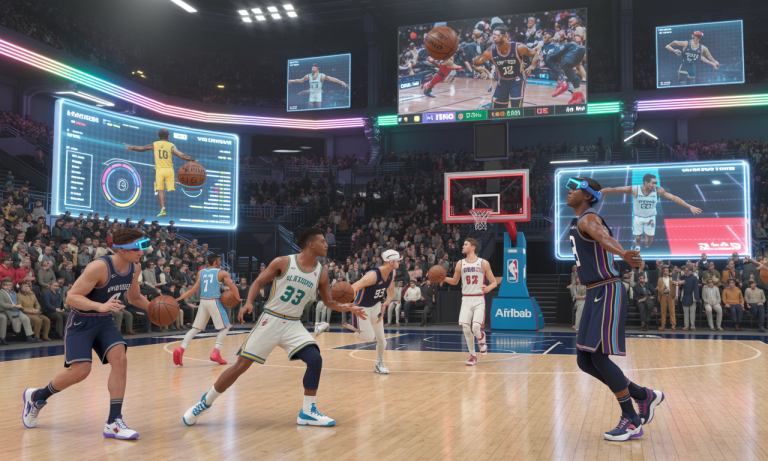
Coaches pair these insights with CourtVision platforms, generating heat maps and shot charts for in-depth offensive and defensive planning. This data-driven approach fine-tunes strategies, adjusting lineups and game plans to exploit opponents’ weaknesses while maximizing their own strengths. The result is a game exponentially richer in strategy and precision.
Optimizing Shot Selection through PlayMaker Insights
Modern NBA offenses prioritize efficiency, heavily influenced by Analytics Edge principles focusing on high-value shots near the rim or beyond the arc. The “Moreyball” philosophy, which minimized mid-range jumpers in favor of three-pointers, remains influential.
- Use of heat maps to direct players toward optimal scoring zones.
- Leveraging Points Per Shot (PPS) data to prioritize shot types.
- Dynamic in-game adjustments thanks to real-time analytics.
GamePlan Analytics give coaches the tools to assess shot probability instantly, helping maximize scoring while minimizing wasted possessions. These advanced metrics drive a continuous push toward offensive precision.
Player Load Management and Injury Prevention with SmartCoach Systems
Beyond offensive schemes and defensive tactics, analytics deeply influence how players are managed physically. Wearable technology and performance tracking now provide coaches with continuous health data, measuring fatigue and risk of injury in real time.
- Player Load metrics quantify exertion levels throughout practices and games.
- Injury Risk Assessment models predict potential stress injuries based on movement and recovery data.
- Fatigue tracking guides rest periods and substitution patterns.
These advances enable coaching staff to balance short-term competitiveness with long-term player longevity, exemplified by the meticulous management of stars such as Kawhi Leonard and LeBron James. Analytics have universally shifted load management from guesswork to an evidence-based science.
Enhancing Defensive Strategy through Statistical Scouting
Defense, once considered more art than science, benefits immensely from analytics. Coaches scrutinize opponent tendencies using Statistical Scouting to unveil patterns that inform tailored defensive plans.
- Identification of opponents’ weak zones via advanced metrics.
- Adjusting defensive alignments based on opponent shooting percentages by court area.
- Implementing rapid in-game switches derived from live data streams.
By understanding who overcommits or struggles with pick-and-roll defenses, teams can “pack the paint” against poor three-point shooters or aggressively contest perimeter threats. Analytics transform defense into a strategic chess match, heightening competition intensity.
Real-Time Analytics and the New Era of NBA Game Management
The advent of CourtVision and other in-game analytics platforms heralds a new era of instantaneous decision-making. Coaches now receive live data feeds on multiple aspects:
- Player performance including shot efficiency and fatigue.
- Opponent tendencies and lineup effectiveness.
- Shot probabilities and hot-hand indicators.
Real-time analytics have catalyzed innovations in substitution strategies and tactical shifts, allowing SmartCoach Systems to adjust defensive and offensive schemes on the fly. For example, if analytics highlight a player’s dominance in isolation plays, coaches pivot offenses to exploit that mismatch immediately.
Challenges in Balancing Basketball IQ with Analytics
While the rise of analytics offers powerful tools, it is not without controversy. Critics caution against overreliance on numbers, pointing out that basketball’s intangible elements, team chemistry, leadership, and mental resilience, resist quantification. Furthermore, poor data interpretation can lead to strategic misfires, and an avalanche of raw statistics carries the risk of analysis paralysis.
- Necessity of blending intuition with Analytics Edge for optimal outcomes.
- Vigilant validation of metrics to avoid misleading conclusions.
- Balancing qualitative insights with quantitative data.
Ultimately, the most successful NBA coaches leverage analytics as a complement to their own experience and basketball instincts rather than a replacement, preserving the art within the science of coaching.
What the Future Holds for NBA Analytics and Coaching Innovation
Looking ahead, the integration of artificial intelligence and machine learning promises to deepen the impact of analytics on NBA coaching strategies. Predictive models will more accurately forecast player performance shifts, injury probabilities, and optimal substitution timings. Mental and emotional factors, such as player confidence and stress, may soon enter the analytic realm with biometric data integration.
- Expansion of AI-driven simulations guiding real-time GamePlan Analytics decisions.
- Democratization of advanced analytics tools beyond the NBA to collegiate and amateur levels.
- Enhanced fan engagement through expanded use of PlayMaker Insights and real-time statistical breakdowns.
As these technologies evolve, the synergy between data science and basketball IQ will likely redefine coaching effectiveness and fan experience, further embedding analytics as a cornerstone of NBA excellence.