McLaren’s Oscar Piastri and Lando Norris Face “Unbelievable Team Tensions” After Charles Leclerc’s Stunning Pole at Hungarian GP
Charles Leclerc secured an unexpected pole position at the Hungarian Grand Prix, creating strategic challenges for McLaren.


| IN A NUTSHELL |
|
In a dramatic turn of events at the Hungarian Grand Prix, Charles Leclerc clinched pole position, leaving McLaren grappling with strategic uncertainties. Oscar Piastri and Lando Norris, who had dominated practice sessions, found themselves outperformed by Leclerc in changing conditions. As the race looms, attention shifts from the missed pole opportunity to the strategic maneuvers McLaren might employ to secure victory. With Piastri and Norris leading the standings, the team faces a delicate balance between individual ambition and collective success against a resurgent Ferrari.
McLaren’s Strategic Challenges
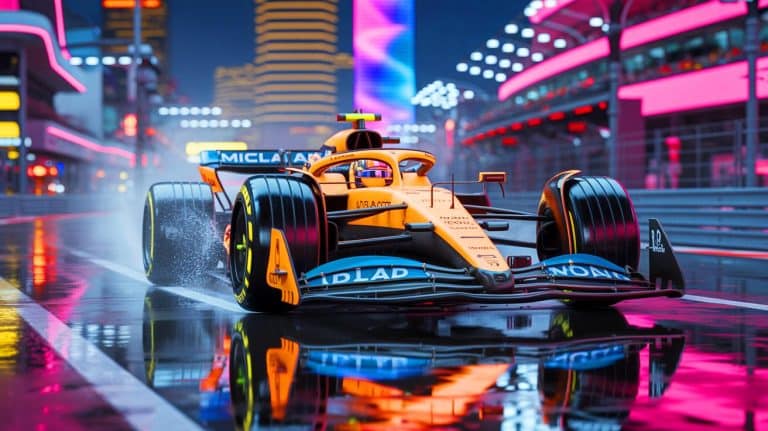
The unexpected pole position claimed by Charles Leclerc has thrust McLaren into a strategic conundrum. Despite leading the championship, Oscar Piastri and Lando Norris must navigate the race with Leclerc starting ahead. This scenario presents McLaren with the opportunity to leverage their two-car advantage over Ferrari. However, the team must carefully weigh their options to avoid internal conflict and capitalize on their position.
Historically, the Hungaroring has been a circuit where overtaking is notoriously difficult. McLaren could exploit this by employing the undercut strategy, allowing one driver to pit early in hopes of leapfrogging Leclerc. However, this approach carries risks, as it could invert the drivers’ positions and create friction within the team. The challenge lies in deciding which driver will sacrifice their strategy for the greater good.
“McLaren kind of need to sacrifice one, almost, to help the other one if they really want to give themselves the best chance,” remarked Sky Sports F1’s Jamie Chadwick.
Piastri and Norris must tread carefully, as their individual championship aspirations could be jeopardized by the decisions made during the race.
The Intricacies of Team Dynamics
Team dynamics within McLaren add another layer of complexity to their Hungarian GP strategy. With both drivers separated by a mere 16 points, the temptation to prioritize personal gain could overshadow the collective goal of securing a win. Past experiences at the Hungaroring highlight the potential pitfalls of strategy decisions driven by individual desires.
Last year’s Hungarian GP saw McLaren’s strategy unravel when they allowed Lando Norris to undercut Oscar Piastri, leading to internal discord. Although the team eventually restored order, the incident underscored the importance of maintaining harmony. This year, McLaren must ensure that their strategy is transparent and agreed upon by both drivers to prevent any miscommunication or resentment.
Their two-against-one situation against Ferrari theoretically provides McLaren with a strategic edge, but it also necessitates that Piastri and Norris work in unison to fend off Leclerc’s challenge. Ultimately, the key to success will be their ability to balance personal ambitions with the overarching team objective.
Weather: A Potential Game-Changer
The possibility of rain introduces another variable to the Hungarian GP equation. If wet conditions prevail, the strategic landscape could shift dramatically. While McLaren’s cars have demonstrated superior speed in dry conditions, rain could level the playing field, offering Leclerc a chance to maintain his lead.
Overtaking becomes more feasible in wet weather, making strategy execution even more critical. McLaren must adapt to the evolving conditions and remain flexible in their decision-making. Piastri and Norris have acknowledged the potential impact of rain and emphasized the importance of a strong start to the race.
“The start here is probably the most important thing and the opening lap,” Norris stated.
By capitalizing on a solid start and making astute strategic choices, McLaren could mitigate the challenges posed by adverse weather conditions.
The Stakes for McLaren
As the race approaches, McLaren’s drivers and strategists face a high-stakes scenario. Leclerc’s pole position has disrupted their initial plans, forcing them to recalibrate their approach. While the team has a comfortable lead in the Constructors’ Championship, the desire for victory remains paramount.
“Neither of them will accept, going into the race, that they are the one that stops earlier to attract Leclerc in,” explained former Aston Martin strategy chief Bernie Collins.
This sentiment reflects the competitive spirit within McLaren, where both drivers are determined to maximize their individual performance while avoiding unnecessary conflicts.
Ultimately, the Hungarian GP presents McLaren with an opportunity to demonstrate their strategic acumen and resilience. As they navigate the complexities of the race, the team’s ability to make calculated decisions will be pivotal in determining the outcome.
The Hungarian Grand Prix promises an intriguing contest, with McLaren and Ferrari locked in a strategic battle. As the race unfolds, the interplay between team dynamics, strategy, and weather conditions will shape the outcome. How will McLaren navigate these challenges to secure victory, and can they maintain team cohesion amid the fierce competition? As the race unfolds, the answers to these questions will reveal the true extent of McLaren’s strategic prowess.