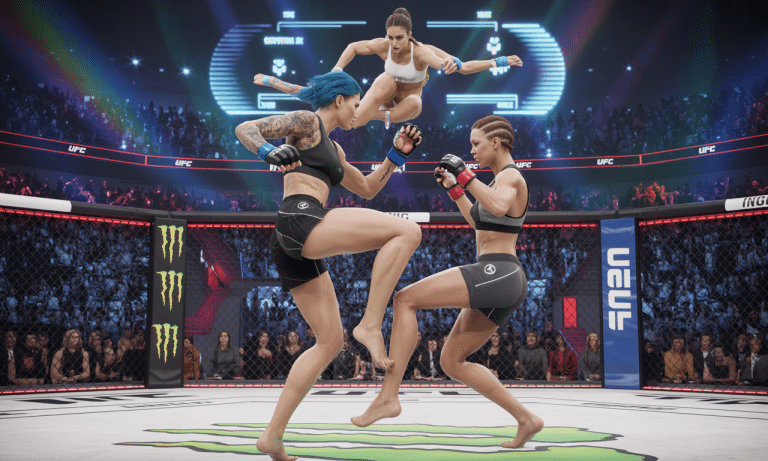
Exploring the rise of UFC in mixed martial arts
The Ultimate Fighting Championship (UFC) has evolved from a daring experiment in the early 1990s into the powerhouse of mixed martial arts (MMA) that it is today.


The Ultimate Fighting Championship (UFC) has evolved from a daring experiment in the early 1990s into the powerhouse of mixed martial arts (MMA) that it is today. Originally conceived as a no-holds-barred contest designed to determine the most effective martial art, the UFC has navigated controversies, strategic shifts, and global expansions to captivate millions worldwide. Its journey reflects the broader transformation of MMA, which has moved from underground competitions to mainstream global phenomena, outpacing other promotions like Bellator, ONE Championship, and others. The UFC’s story is a testament to innovative leadership, adaptive media strategies, and a commitment to showcasing diverse fighting talents, which collectively have propelled it to unprecedented heights in the world of combat sports.
The Early Foundations of UFC and Its Formative Years
The inception of UFC was the brainchild of Art Davie, who drew inspiration from Brazilian vale tudo fights, proposing a single-elimination tournament featuring eight fighters with minimal rules. Collaborating with John Milius and Rorion Gracie, they aimed to spotlight Gracie Jiu-Jitsu, creating a raw and thrilling spectacle unlike anything seen before in combat sports. UFC 1, held in 1993 at the McNichols Sports Arena in Denver, Colorado, set the standard for this unfiltered competition style.
- Conceptual Genesis: Minimal rules to test martial arts effectiveness.
- Initial Event: UFC 1 as a groundbreaking no-holds-barred tournament.
- Key Inspiration: Brazilian vale tudo and Gracie Jiu-Jitsu’s prominence.
This unregulated approach, however, faced significant criticism, with detractors likening it to “human cockfighting.” This feedback became a catalyst for pivotal reforms that would guide the sport’s future.
Transforming Raw Combat into Regulated Sport
Responding to public concern and regulatory challenges, the UFC instituted changes such as defined weight classes, rounds, and standardized rules aligned with Athletic Commission requirements. These adjustments enhanced safety and granted the promotion greater legitimacy, paving the way for mainstream acceptance.
- Implementation of Safety Measures: Rules prohibiting dangerous actions.
- Structural Developments: Weight divisions and timed rounds.
- Regulatory Compliance: Alignment with athletic commissions.
In 2001, the acquisition by Dana White and the Fertitta brothers marked a new era. White’s vision led to pivotal media partnerships, most notably with Spike TV for “The Ultimate Fighter” reality series, which dramatically expanded the UFC’s fanbase.
Global Expansion and Cementing Cultural Influence
By extending its reach beyond the United States and embracing fighters from around the world, UFC transcended its American roots to become a truly international entity. Fighters such as Conor McGregor, Khabib Nurmagomedov, and Anderson Silva brought unique styles and charisma, enriching the global appeal of the promotion.
- International Event Locations: Hosting fights on multiple continents.
- Inclusive Fighter Roster: Welcoming diverse cultural backgrounds.
- Global Fanbase Growth: Expansion into Europe, Asia, and beyond.
This global strategy distinguished UFC from other organizations like Bellator, PFL, and ONE Championship, firmly establishing it as the premier destination for elite MMA competition worldwide.
Innovations Driving Growth in a Digital Era
Adapting swiftly to the digital age, UFC launched “Fight Pass,” an online streaming service offering live events, historical fight archives, and exclusive content. This platform caters to the younger generation’s consumption preferences, enhancing fan engagement and expanding revenue streams.
- Launch of UFC Fight Pass: Digital accessibility to live and archived fights.
- Interactive Fan Experience: Integration with authorized sports betting platforms.
- Adaptation to Media Trends: Prioritization of streaming and digital content delivery.
By leveraging these innovations, UFC not only stays ahead in the competitive landscape alongside organizations like KSW, Cage Warriors, Invicta FC, and Rizin Fighting Federation but also continuously evolves to meet fans’ evolving expectations.
Legacy of UFC as a Catalyst in Mixed Martial Arts Evolution
The UFC has undeniable influence in redefining professional fighting, pushing boundaries in athlete presentation, sport regulation, and global outreach. It has transformed MMA from a niche challenge into a culturally significant, globally followed sport and is poised to continue shaping its future trajectory.
- Redefining Martial Arts Competitions: From unregulated contests to certified sport.
- Global Cultural Impact: MMA as a platform for diverse athletes worldwide.
- Future Prospects: Sustained innovation promising greater reach and influence.
As the UFC moves forward, it not only strengthens its own legacy but also elevates the entire landscape of mixed martial arts, inspiring the rise of both established and emerging organizations.