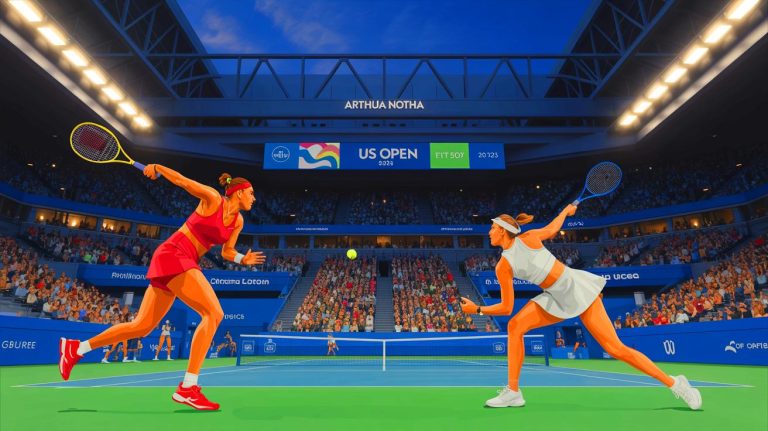
The evolution of tennis techniques over the years
offers a captivating glimpse into how this sport has metamorphosed from a leisurely pastime into a disciplined, power-driven spectacle.


The evolution of tennis techniques over the years offers a captivating glimpse into how this sport has metamorphosed from a leisurely pastime into a disciplined, power-driven spectacle. From the 1970s courts of Wimbledon bearing the marks of wear all over to today’s concentrated baseline footwork, the sport’s transformation mirrors advancements in equipment and the refinement of playing techniques. Today’s tennis stars, like Carlos Alcaraz and Jannik Sinner, exhibit a blistering pace of play and remarkable precision, a stark contrast to the more measured styles of past decades. This shift is deeply intertwined with technological innovations in rackets and strings, alongside strategic grip changes that have opened new horizons for spin and power. As tennis continues to evolve under the influence of cutting-edge materials from brands such as Wilson, Head, and Babolat, it becomes clear that the sport is perpetually redefining its boundaries, embracing both its storied past and a dynamic future.
How Equipment Innovations Have Redefined Tennis Techniques
The radical changes in tennis equipment over the decades have been foundational in shaping the sport’s evolving techniques. Early players wielded heavy wooden rackets with small heads, limiting power and spin. The transition in the 1970s and 1980s to lighter aluminum and graphite rackets by innovators like Prince and Dunlop revolutionized shot dynamics, empowering players to unleash faster, more aggressive strokes from the baseline.
- Racket Material Advancements: The shift to graphite combined with technological innovations by Yonex and Babolat enabled players to generate increased racket head speed, delivering greater ball velocity.
- String Technology: Moving from natural gut to polyester and multifilament strings dramatically enhanced the ability to impart spin and maintain tension, facilitating aggressive play styles.
- Ball Evolution: Modern tennis balls feature improved durability and consistency, contributing to faster rallies and accentuating players’ power and precision.
- Footwear and Apparel: Brands like Nike, Adidas, and Mizuno introduced performance-optimized apparel and shoes, improving players’ agility and endurance on varying court surfaces.
Collectively, these equipment innovations have been pivotal for contemporary techniques emphasizing speed, spin, and adaptability, laying the groundwork for the intense baseline battles seen today.
Technique Advances Fueled by Grip and Spin
One of the most significant technical evolutions has been the adoption of grips that maximize spin and power. Players transitioning from the traditional continental grip to Eastern, Semi-Western, and Western grips can now brush the ball more effectively, augmenting spin without compromising control.
- Spin Generation: The Western grip allows players to create topspin exceeding historical norms, enabling aggressive shots that stay deep and force defensive responses.
- Stroke Speed: Advances in grip combined with string technology promote quick acceleration through the ball, increasing shot velocity.
- Physical Strain: Enhanced spin techniques demand greater wrist and shoulder strength, leading to a rise in overuse injuries among professionals, which underscores the importance of conditioning and recovery.
This tactical embrace of spin has essentially rewritten baseline play’s script, reflecting a game increasingly dictated by power and precision.
Evolution of Playing Styles: From Serve-and-Volley to Baseline Dominance
Tennis strategies have undergone a dramatic shift from the grip-and-rush tactics of the mid-20th century to the dominance of baseline play evident in today’s game. This transition corresponds closely with equipment advances and changing court conditions.
- Serve-and-Volley Era: Icons like Rod Laver and John McEnroe thrived on quick net approaches, using wooden rackets that favored control over raw power.
- Baseline Power Shift: Players such as Björn Borg began utilizing heavy topspin and powerful groundstrokes as graphite rackets made baseline aggression feasible.
- Modern Aggression: Stars like Daniil Medvedev and Jannik Sinner dominate with potent serves exceeding 230 km/h and groundstrokes laden with heavy spin, often neutralizing net rushes entirely.
The baseline-centric style has become the norm, reflecting not only players’ enhanced physical capabilities but also the strategic advantages provided by contemporary equipment from Wilson and Head.
Serve and Volley’s Changing Role in Modern Tennis
While the serve-and-volley style has diminished in prevalence, it has not vanished entirely. Rapid baseline exchanges and the increased speed of play have made net approaches riskier. However, skillful drop shots and delicate volleys remain strategic weapons for players who master variation and touch.
- Serve Dynamics: Modern servers, often tall players such as Alexander Zverev, exploit equipment to generate aces and powerful kick serves that bounce above two meters.
- Touch Plays: Leaders like Roger Federer historically intertwined power with finesse, incorporating drop volleys and slice shots to disrupt opponents.
- Volley Technique Adaptation: Players now execute volleys with greater precision to counter pace and angle, an evolution supported by technological strides in racket design.
This blend of power and finesse exemplifies tennis’s multifaceted nature, emphasizing strategic diversity even within a power-centric era.
Impact of Court Surface and Conditions on Technique and Playstyle
The nature of tennis courts has transformed dramatically post-1970s, influencing how the game is played and which techniques prevail. Originally dominated by fast grass and carpet courts, the trend has shifted towards slower hard and clay surfaces globally.
- Surface Slowdown: Slower courts extend rallies, rewarding stamina, tactical variety, and spin-based strokes.
- Condition Adaptations: Players tailor techniques with awareness of bounce height, ball speed, and footing, factors drastically affected by surface type.
- Equipment Synergy: Advances in racket stiffness and string composition have enabled players to exploit slower courts by enhancing shot accuracy and spin.
The interplay between court surfaces and equipment technologies continues to shape tactical evolutions, reinforcing the sport’s dynamic and adaptable nature.
Technology, Data, and the Future Trajectory of Tennis Techniques
The integration of data analytics, biomechanics, and AI coaching is transforming how players refine their techniques and strategies. These tools provide granular insights into serve speed, spin rates, and movement efficiency, accelerating the sport’s evolution into a data-driven arena.
- Smart Rackets: Emerging models by brands like Gamma may soon incorporate sensors that offer real-time feedback.
- AI-Assisted Coaching: Machine learning algorithms analyze player tendencies to optimize training and match tactics.
- Mental and Physical Recovery: Sports science advances place growing emphasis on injury prevention and psychological resilience, extending peak performance years.
As technology deepens its footprint in tennis, the techniques of tomorrow will blend human ingenuity with sophisticated machine insight, ushering in an era of unprecedented athletic storytelling.